Moral Injury: Why society shares blame for the scars of war.
We often think of war as something that happens “over there” to people who chose that life. We clap at sporting events, thank veterans for their service, and post patriotic images on holidays. But when the parades are over, and the uniforms come off, many warriors carry invisible wounds that go much deeper than any physical scar.
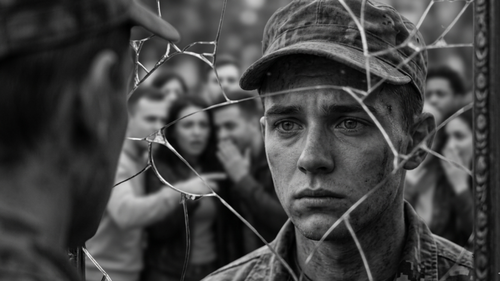
When someone comes home from war, they are not the same as when they left. They may not look injured, but they have seen and experienced things that change them. One of the deepest wounds they can carry is called moral injury—harm done to a person’s sense of right and wrong, their conscience, and their character. And that wound doesn’t just belong to them. In an important way, it belongs to all of us.
If we send men and women into combat, and if we enjoy the safety and freedoms they help protect, then we cannot pretend we have nothing to do with the burdens they bring home. We share in the responsibility—and we should share in the healing.
When someone comes home from war, they are not the same as when they left. They may not look injured, but they have seen and experienced things that change them. One of the deepest wounds they can carry is called moral injury—harm done to a person’s sense of right and wrong, their conscience, and their character. And that wound doesn’t just belong to them. In an important way, it belongs to all of us.
If we send men and women into combat, and if we enjoy the safety and freedoms they help protect, then we cannot pretend we have nothing to do with the burdens they bring home. We share in the responsibility—and we should share in the healing.
What Is Moral Injury?
Moral injury is not the same as PTSD, fear, or physical trauma. There are a lot of situations in a gunfight that can bring on Moral Injury. Basically, it’s an injury to the soul.
A morally injured warrior might be haunted not only by what happened to them, but also by what they did—or didn’t do—when everything was on the line.
This kind of wound doesn’t just affect one person privately. It affects relationships, families, communities, and even the moral health of a nation.
A morally injured warrior might be haunted not only by what happened to them, but also by what they did—or didn’t do—when everything was on the line.
This kind of wound doesn’t just affect one person privately. It affects relationships, families, communities, and even the moral health of a nation.
The Myth That “They Knew What They Signed Up For”
One of the easiest ways society absolves itself of responsibility is the false belief: “Well, they volunteered. They knew what they signed up for.”
Maybe they did… maybe they didn’t. But anyone who sleeps in a free society benefits tonight from their nightmares.
By the way, no one truly knows what they’re signing up for when they step onto a battlefield for the first time. Nothing can totally prepare someone for their first gunfight. I know this from personal experience. Society recruits warriors with language of honor, courage, duty, and service. We wrap their sacrifice in moral language. But rarely do we prepare them—or ourselves—for the moral cost of modern war.
If we helped convince them that their cause was just, then we share in the moral responsibility when they struggle to reconcile what they were told with what they saw.
Maybe they did… maybe they didn’t. But anyone who sleeps in a free society benefits tonight from their nightmares.
By the way, no one truly knows what they’re signing up for when they step onto a battlefield for the first time. Nothing can totally prepare someone for their first gunfight. I know this from personal experience. Society recruits warriors with language of honor, courage, duty, and service. We wrap their sacrifice in moral language. But rarely do we prepare them—or ourselves—for the moral cost of modern war.
If we helped convince them that their cause was just, then we share in the moral responsibility when they struggle to reconcile what they were told with what they saw.
How Society Helps Create Moral Injury
Moral injury does not arise in a vacuum. It grows out of the larger story we tell about war—the decisions we make as a country, the images we consume, the way we treat warriors when they return.
Like it or not, all of us shape that story. Here are some ways society contributes to moral injury:
1. The Decisions to Go to War
Privates and sergeants do not declare wars. Political leaders do—leaders we elect, support, and follow. That’s why we share in those decisions when we cheer for military action without counting the human cost. When we demand action without demanding wisdom, truth, and restraint from our leaders, we help create the conditions in which warriors face impossible moral choices—and we share responsibility for the injuries that result.
2. Unrealistic Stories About “Clean” War
Our culture often sells a simple story: The good guys vs. bad guys movies and video games don’t look anything like real combat. When we feed warriors a sanitized, heroic version of war, and then they collide with the brutal reality of modern combat. The space between the myth of war and the reality of war is where moral injury often takes root.
3. Betrayal by Leaders and Institutions
For many veterans, the deepest pain is not what happened in combat, but what happened afterward. Moral injury can come from a sense of betrayal when the nation that asked for your sacrifice then looks away, cuts services, or judges them from a distance. The message is clear: “Your scars are your problem, not ours.” That’s not just a personal tragedy. It’s a failure of the entire community.
4. Silence and Avoidance
Many veterans discover that once they’re home, people don’t really want to know what happened. This avoidance sends its own message: “We were willing to send you, but we don’t have space for your story.” When warriors are left to carry the moral weight alone, that weight only grows heavier.
Like it or not, all of us shape that story. Here are some ways society contributes to moral injury:
1. The Decisions to Go to War
Privates and sergeants do not declare wars. Political leaders do—leaders we elect, support, and follow. That’s why we share in those decisions when we cheer for military action without counting the human cost. When we demand action without demanding wisdom, truth, and restraint from our leaders, we help create the conditions in which warriors face impossible moral choices—and we share responsibility for the injuries that result.
2. Unrealistic Stories About “Clean” War
Our culture often sells a simple story: The good guys vs. bad guys movies and video games don’t look anything like real combat. When we feed warriors a sanitized, heroic version of war, and then they collide with the brutal reality of modern combat. The space between the myth of war and the reality of war is where moral injury often takes root.
3. Betrayal by Leaders and Institutions
For many veterans, the deepest pain is not what happened in combat, but what happened afterward. Moral injury can come from a sense of betrayal when the nation that asked for your sacrifice then looks away, cuts services, or judges them from a distance. The message is clear: “Your scars are your problem, not ours.” That’s not just a personal tragedy. It’s a failure of the entire community.
4. Silence and Avoidance
Many veterans discover that once they’re home, people don’t really want to know what happened. This avoidance sends its own message: “We were willing to send you, but we don’t have space for your story.” When warriors are left to carry the moral weight alone, that weight only grows heavier.
Why Moral Injury Is Everyone’s Problem
Moral injury affects far more than the individual who went to war.
It Affects Families- Spouses, children, and parents feel the weight of the battle when warriors return home. The warrior’s inner conflict spills over into every relationship they touch.
It Affects Communities- Moral injury can contribute to a range of problems in the community when these brave men and women return home. These are not random social issues. They are reflections of the moral and spiritual wounds at the heart of our communities.
It Affects the Soul of the Nation- A society that sends people to war but refuses to engage with the moral costs is doing damage not only to its warriors, but to its own conscience. Any nation that cannot look honestly at the moral wounds of its warriors is a nation in danger of losing its own moral compass.
It Affects Families- Spouses, children, and parents feel the weight of the battle when warriors return home. The warrior’s inner conflict spills over into every relationship they touch.
It Affects Communities- Moral injury can contribute to a range of problems in the community when these brave men and women return home. These are not random social issues. They are reflections of the moral and spiritual wounds at the heart of our communities.
It Affects the Soul of the Nation- A society that sends people to war but refuses to engage with the moral costs is doing damage not only to its warriors, but to its own conscience. Any nation that cannot look honestly at the moral wounds of its warriors is a nation in danger of losing its own moral compass.
Why It Matters Now… and Always!
If society shares responsibility for moral injury, it must also share in healing it. That healing begins with simple but courageous choices: refusing to glorify or demonize war, speaking honestly about what it does to human beings on every side, demanding leaders whose decisions are as morally serious as the sacrifices they require, and staying present long after the troops come home.
It’s easy to look away while warriors fight battles you’ll never see. If you want to be worthy of those sacrifices, you must do more than cheer from the sidelines: you must show up, stay engaged, and carry the moral weight with them —long after they come home.
The moral injuries of war are not just their scars; they are our scars. If we send them, we must also help them heal.
It’s easy to look away while warriors fight battles you’ll never see. If you want to be worthy of those sacrifices, you must do more than cheer from the sidelines: you must show up, stay engaged, and carry the moral weight with them —long after they come home.
The moral injuries of war are not just their scars; they are our scars. If we send them, we must also help them heal.
1 Comment
Good insight. A perspective I had not considered.