Why the Lone Ranger always fails in the end
Can you be tough and interdependent at the same time? Do you really have to choose one? Independence vs. Interdependence is a lie—why you were never meant for only one!
We live in an age that loves clean lines and simple choices: introvert or extrovert, left-brained or right-brained, leader or follower. And somewhere near the top of that list sits another supposed choice: will you be independent or interdependent?
The message is often loud and clear: choose! Be tough and self-sufficient, or be humble and team-minded. Stand on your own two feet, or lean on others.
But what if this whole premise is broken? What if independence vs. interdependence is a false dichotomy—a made-up either/or world that limits your growth, relationships, and impact?
You were never meant to be fully independent. You were never meant to be merely dependent. You were designed to be both deeply comfortable in who you are and deeply connected to others.
We live in an age that loves clean lines and simple choices: introvert or extrovert, left-brained or right-brained, leader or follower. And somewhere near the top of that list sits another supposed choice: will you be independent or interdependent?
The message is often loud and clear: choose! Be tough and self-sufficient, or be humble and team-minded. Stand on your own two feet, or lean on others.
But what if this whole premise is broken? What if independence vs. interdependence is a false dichotomy—a made-up either/or world that limits your growth, relationships, and impact?
You were never meant to be fully independent. You were never meant to be merely dependent. You were designed to be both deeply comfortable in who you are and deeply connected to others.
How I learned Interdependence
From an early age, I heard the same phrases you did: “Be strong.” “Figure it out on your own.” When I joined the US Army, those small phrases became a mantra. By the time I made it into the US Army Rangers, everything about my life became a lesson in personal toughness.
The independence narrative taught me that responsibility matters. Initiative matters. Courage matters. While I agree with these concepts to a degree, they don’t tell the whole story.
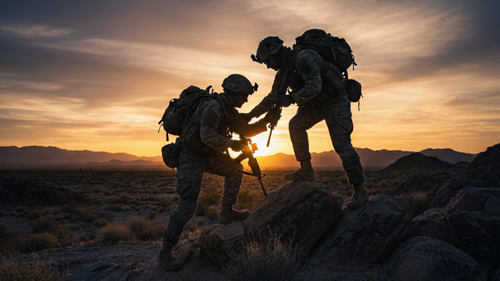
At the same time that I was being challenged to be strong and independent, I was also learning to be interdependent. The challenges of training and combat were so overwhelming, the situations so difficult, that no single warrior could handle them all alone. Every day was also an object lesson in why I needed a Ranger Buddy. Eventually, I learned that “Lone Rangers” always fail at some point.
I’ve seen it too many times when independence becomes a self-identity instead of a skill. That’s the moment when independence quietly morphs into isolation. When you stop asking for help, stop opening up, and stop letting people see your weaknesses, independence ceases to be an asset and becomes a liability. Isolation leads to failure.
The independence narrative taught me that responsibility matters. Initiative matters. Courage matters. While I agree with these concepts to a degree, they don’t tell the whole story.
At the same time that I was being challenged to be strong and independent, I was also learning to be interdependent. The challenges of training and combat were so overwhelming, the situations so difficult, that no single warrior could handle them all alone. Every day was also an object lesson in why I needed a Ranger Buddy. Eventually, I learned that “Lone Rangers” always fail at some point.
I’ve seen it too many times when independence becomes a self-identity instead of a skill. That’s the moment when independence quietly morphs into isolation. When you stop asking for help, stop opening up, and stop letting people see your weaknesses, independence ceases to be an asset and becomes a liability. Isolation leads to failure.
The Misunderstood Power of Interdependence
On the other hand, we hear encouraging words about teamwork: "Who’s got your 6?” Interdependence is described as shared responsibility, mutual trust, and working together. This is also positive—no one thrives in isolation. We are made for connection.
But when interdependence is misunderstood, or your self-identity is fragile, it can deteriorate into unhealthy dependence: relying on others to validate your every decision, sacrificing your voice to maintain peace, and confusing people-pleasing with genuine teamwork.
Suddenly, what begins as camaraderie shifts into dependency on approval. We don’t merely enjoy others; we rely on them to feel good. That’s not true interdependence—it’s a form of captivity!
But when interdependence is misunderstood, or your self-identity is fragile, it can deteriorate into unhealthy dependence: relying on others to validate your every decision, sacrificing your voice to maintain peace, and confusing people-pleasing with genuine teamwork.
Suddenly, what begins as camaraderie shifts into dependency on approval. We don’t merely enjoy others; we rely on them to feel good. That’s not true interdependence—it’s a form of captivity!
The Lie: Choosing Sides
This is a false choice we’ve been told: either be strong and independent, or be interconnected and a team player. Roots without branches are invisible and buried—alive but not thriving. Branches without roots look impressive, but they can't handle the weather.
The truth is, you were meant for both! The most healthy, grounded, and toughest people aren't limited to independence or interdependence—they are a powerful blend of both, capable of rising above any challenge.
They don’t hold tightly to self-sufficiency out of fear, nor do they cling to others out of insecurity. The strongest warriors I know stand tall AND stand together, embodying resilience and unwavering unity.
What Healthy Independence Looks Like
The truth is, you were meant for both! The most healthy, grounded, and toughest people aren't limited to independence or interdependence—they are a powerful blend of both, capable of rising above any challenge.
- Independent in identity – They know who they are, what they value, and whose they are. Their worth isn’t on trial every day.
- Interdependent in practice – They give and receive help freely. They contribute to others and also allow others to contribute to them.
They don’t hold tightly to self-sufficiency out of fear, nor do they cling to others out of insecurity. The strongest warriors I know stand tall AND stand together, embodying resilience and unwavering unity.
What Healthy Independence Looks Like
Healthy independence is not a rejection of others. It’s not emotional distance or stubborn self-reliance.
Healthy independence is:
1. Recognizing your true core identity. Your worth isn’t determined by performance, possessions, or others’ opinions. You have a divine value that remains constant regardless of circumstances.
Healthy independence is:
1. Recognizing your true core identity. Your worth isn’t determined by performance, possessions, or others’ opinions. You have a divine value that remains constant regardless of circumstances.
2. Taking responsibility for your choices. Own your decisions. You aren't a victim of others’ actions. Learn to apologize, forgive, and alter your path.
3. Living out your own values. Be clear about what you stand for and confidently say “yes” or “no” without being driven by guilt, fear, or external pressure.
This kind of independence doesn’t drive people away; it draws them closer—because you present yourself as a complete, genuine person, not a hollow shell.
What True Interdependence Looks Like
What True Interdependence Looks Like
True interdependence isn’t about feeling helpless. It isn’t a reason to shirk responsibility or depend on others for what only God can supply.
Strong Interdependence is:
1. Shared strength. You contribute your own abilities and welcome others to do the same. You’re not intimidated by others’ talents; instead, you appreciate them.
Strong Interdependence is:
1. Shared strength. You contribute your own abilities and welcome others to do the same. You’re not intimidated by others’ talents; instead, you appreciate them.
2. Mutual vulnerability. You openly show your true self—including doubts, struggles, fears, and failures—and create a safe environment where others feel comfortable doing the same.
3. Reciprocal support. At times, you are the one supporting others; at other times, you rely on their support. This isn't a sign of weakness—it’s a form of wisdom.
True interdependence says: “I am responsible for me, but I am not meant to walk alone.”
The Hidden Cost of Staying in Either Extreme
Clinging to one side of this false dichotomy causes something powerful to be lost. When you cling solely to independence, you might succeed publicly but face private struggles. You may gain admiration but remain truly unknown. While you accomplish a lot, your soul can become weary and brittle.
You begin to think, “If I don’t hold onto everything, everything will fall apart.” When you cling solely to interdependence, you might be surrounded by people but unsure of your true self. You could mistake busyness for a sense of belonging. You may also experience an emotional roller coaster, riding the highs and lows based on others’ approval.
You begin to believe, “If I’m not needed or liked, I am nothing.” Both extremes are prisons—promising freedom but ultimately binding you in chains.
You begin to think, “If I don’t hold onto everything, everything will fall apart.” When you cling solely to interdependence, you might be surrounded by people but unsure of your true self. You could mistake busyness for a sense of belonging. You may also experience an emotional roller coaster, riding the highs and lows based on others’ approval.
You begin to believe, “If I’m not needed or liked, I am nothing.” Both extremes are prisons—promising freedom but ultimately binding you in chains.
The Challenge: Integrated Living
What if you stopped doubting whether you're independent or interdependent, and instead accepted that you can be both—staying true to yourself while also leaning on a Ranger Buddy?
This is what I call integrated living: a life where your identity is rooted in something far greater than fleeting circumstances. It’s a way of being connected to a purpose rather than yourself. Sharing your strengths openly, inspiring others, and acknowledging your weaknesses honestly fosters growth. You honor your unique identity and understand the vital importance of others in your journey.
This is what I call integrated living: a life where your identity is rooted in something far greater than fleeting circumstances. It’s a way of being connected to a purpose rather than yourself. Sharing your strengths openly, inspiring others, and acknowledging your weaknesses honestly fosters growth. You honor your unique identity and understand the vital importance of others in your journey.
Independence and interdependence working together
The toughest Rangers know how to lean hard on a Ranger Buddy. Your purpose isn't to show you don’t need anyone. It's not to merge so fully with others that you lose yourself. Instead, your calling is to live as a strong person among others, grounded in your identity. Stay connected to those around you and remain dependent on King Jesus, who sustains everything.
Independence and interdependence are powerful allies, not enemies—they are meant to complement one another. When they work in harmony, your life becomes a powerful example for others who live only on one side of the lie.
Independence and interdependence are powerful allies, not enemies—they are meant to complement one another. When they work in harmony, your life becomes a powerful example for others who live only on one side of the lie.
No Comments