
From Swords to Plowshares: How a Warrior Can Find Lasting Peace After the Battle.
Warriors are trained to fight! So, it’s no surprise that they fight an internal battle for peace—especially after they return from the war.
The echoes remain after the bombs stop exploding—in memories, in reflexes, in sudden moments of fear or anger that seem to appear out of nowhere. Many of my friends learned that the hardest ground they’ll ever fight on isn’t foreign soil, it’s the quiet of their own heart when they return from a combat deployment.
I’m convinced that this final struggle is the fight where lasting peace is found.
The echoes remain after the bombs stop exploding—in memories, in reflexes, in sudden moments of fear or anger that seem to appear out of nowhere. Many of my friends learned that the hardest ground they’ll ever fight on isn’t foreign soil, it’s the quiet of their own heart when they return from a combat deployment.
I’m convinced that this final struggle is the fight where lasting peace is found.
When the battle follows you home
Coming home can feel more foreign than a distant battlefield. After the adrenaline of combat, ordinary life can feel strangely foreign. Crowds feel dangerous. Sleep is elusive. Relationships strain under the unspoken weight a warrior carries in the heart.
The ancient instincts that once sustained a warrior now feel like shackles: anger that erupts too swiftly, isolation that seems safer than connection, an unending vigilance for danger that never ceases. The world has returned to normal, but the warrior remains trapped.
This is the most important fight AFTER returning home. What you did in combat determines whether you live or die- what you do AFTER you return from combat determines what the rest of your life will be like. This is the moment when you begin to search for something more than just "surviving." You begin to hunger for "thriving".
The ancient instincts that once sustained a warrior now feel like shackles: anger that erupts too swiftly, isolation that seems safer than connection, an unending vigilance for danger that never ceases. The world has returned to normal, but the warrior remains trapped.
This is the most important fight AFTER returning home. What you did in combat determines whether you live or die- what you do AFTER you return from combat determines what the rest of your life will be like. This is the moment when you begin to search for something more than just "surviving." You begin to hunger for "thriving".
The turning point: realizing you can’t heal yourself
Everything that you learned in training was designed to help you fight through the chaos of combat: self-reliance, push through, tough it out, and don’t show weakness. However, that training may be the very thing working against you when you return home. That mindset that helped you win battles can be the very thing that prevents you from healing when you return.
Lasting peace begins with an honest admission: I can’t fix this on my own.
I have always said that the strongest warriors I know are the men and women who are willing to admit when they need help. Because the moment that you stop trying to fix your problems on your own, and reach out for help is the very moment that you start to make genuine progress.
Asking for help isn’t a sign of defeat—it’s actually a way of surrendering. And surrender, in a spiritual sense, is quite different from what it means in a battle. On the battlefield, surrendering means losing control to an enemy. In a spiritual sense, surrendering means letting go and trusting a loving God.
In those moments, a simple prayer can become the beginning of a new life: “God, I can’t carry this anymore. I need your help to find peace.”
Lasting peace begins with an honest admission: I can’t fix this on my own.
I have always said that the strongest warriors I know are the men and women who are willing to admit when they need help. Because the moment that you stop trying to fix your problems on your own, and reach out for help is the very moment that you start to make genuine progress.
Asking for help isn’t a sign of defeat—it’s actually a way of surrendering. And surrender, in a spiritual sense, is quite different from what it means in a battle. On the battlefield, surrendering means losing control to an enemy. In a spiritual sense, surrendering means letting go and trusting a loving God.
In those moments, a simple prayer can become the beginning of a new life: “God, I can’t carry this anymore. I need your help to find peace.”
Meeting the God who understands your wounds
I can't tell you how many warriors I have met who struggle with the idea of a loving God, especially when God knows what they have done or what they have been exposed to on a battlefield. Convinced that God is going to condemn them for their actions in combat. But the story of Scripture reveals something very different: a God who enters pain, not one who avoids it.
Jesus understands the depths of death and destruction firsthand. Described as the One who was "pierced" and "crushed," He is a suffering Savior intimately acquainted with trauma, rejection, and unjust violence. His wounds are not distant; they are His own, bearing the scars of a world in pain.
A warrior can bring every memory, regret, and unspoken fear before a God who isn’t shocked or offended. He offers forgiveness for the unforgivable, compassion for the unspeakable, and hope where there has only been survival. The cross becomes more than a symbol; it’s the meeting place where a warrior’s past meets God’s mercy.
Jesus understands the depths of death and destruction firsthand. Described as the One who was "pierced" and "crushed," He is a suffering Savior intimately acquainted with trauma, rejection, and unjust violence. His wounds are not distant; they are His own, bearing the scars of a world in pain.
A warrior can bring every memory, regret, and unspoken fear before a God who isn’t shocked or offended. He offers forgiveness for the unforgivable, compassion for the unspeakable, and hope where there has only been survival. The cross becomes more than a symbol; it’s the meeting place where a warrior’s past meets God’s mercy.
Laying down your invisible weapons
Spiritual transformation doesn't happen overnight, but it lasts. Over time, God helps you let go of more than just physical defenses. He invites you to release the shield of emotional numbness, the sword of constant anger, and the armor of isolation and distrust.
In prayer, in Scripture, and in the company of people who listen without judgment, you can start to be free from the haunting memories of combat. Each time you bring a memory into God’s light, shame loses a little more of its power.
Instead of hiding wounds, you can see them as places where God’s healing is possible.
In prayer, in Scripture, and in the company of people who listen without judgment, you can start to be free from the haunting memories of combat. Each time you bring a memory into God’s light, shame loses a little more of its power.
Instead of hiding wounds, you can see them as places where God’s healing is possible.
Real peace lasts long after the fight ends
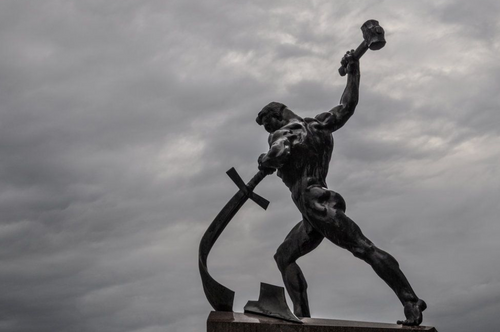
The Bible speaks of a peace that “surpasses all understanding”—a peace that does not depend on circumstances, that can sit with sorrow and yet remain unshaken. This is the idea the Prophet Isaiah had in mind when he described beating swords into plowshares and turning spears into pruning hooks (Isaiah 2:4).
Only God can provide this kind of peace—the kind that doesn't rely on weapons or conflict because he has changed the circumstances that lead to battle. This is the peace God offers you—a comforting assurance that you are more than what you’ve seen or done. He doesn’t erase your memories but redeems them. Jesus offers not just a fragile calm but a steady confidence in knowing you are loved and accepted just as you are.
By placing your pain in Jesus’s hands, you can move from surviving to thriving—not by forgetting the battle, but by discovering that King Jesus walks with you beyond it, into a peace that lasts forever.
Only God can provide this kind of peace—the kind that doesn't rely on weapons or conflict because he has changed the circumstances that lead to battle. This is the peace God offers you—a comforting assurance that you are more than what you’ve seen or done. He doesn’t erase your memories but redeems them. Jesus offers not just a fragile calm but a steady confidence in knowing you are loved and accepted just as you are.
By placing your pain in Jesus’s hands, you can move from surviving to thriving—not by forgetting the battle, but by discovering that King Jesus walks with you beyond it, into a peace that lasts forever.
This Thursday thought is just the baseline. Tomorrow, I am dropping the explosive final episode of my 6-part miniseries, The Warrior's Soul: Ethics for Killing. In Episode 6, I’m pulling back the curtain completely on what it looks like to lay the weapon down and reclaim your soul. If you or someone you love wears a uniform, you cannot afford to miss this episode.

No Comments