The One Question That Made Me Rethink My Leadership
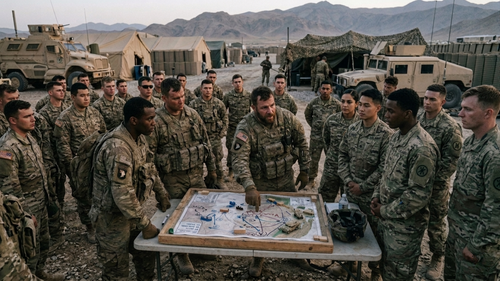
One of the greatest military leaders I ever worked with said, “An AAR is just a complaint session if nothing changes!” I learned a lot from that simple statement. I was the typical Ranger Squad Leader who used the “After Action Review” (AKA “hot wash”) to complain. Until Captain Richard Clarke led his first company-level AAR after a live-fire mission on Griswald Range in Fort Benning, GA. That’s the day I learned a powerful leadership lesson that has stuck with me for the rest of my life.
There’s a big difference between talking about a mission and changing because of it. Most units say they do After Action Reviews. But a lot of those “AARs” are just complaint sessions where nobody owns a problem or the responsibility to change it.
There’s a big difference between talking about a mission and changing because of it. Most units say they do After Action Reviews. But a lot of those “AARs” are just complaint sessions where nobody owns a problem or the responsibility to change it.
Turning an AAR Into Real Change
This is part of human nature. We all have an innate desire to protect our reputation and our careers. Finger-pointing is also a lesson in group dynamics. A real team is willing to be honest, no matter how much it hurts, to get better in the future. AARs typically end with a few comments, a couple of jokes, and no real change. I learned the hard way that this innate self-protection is a cowardly way to shift blame. What kind of leader was I if I wasn’t willing to own a problem?
This is where Captain (now Retired General) Richard Clarke’s leadership stood out. He didn’t try to radically alter how the Rangers fought overnight. He didn’t try to change the unit’s culture. He simply asked one question. A question I can’t forget. I believe it’s the one question that sets great teams apart. He asked, “How do we make a 1% improvement before we do this training mission again?”
This is where Captain (now Retired General) Richard Clarke’s leadership stood out. He didn’t try to radically alter how the Rangers fought overnight. He didn’t try to change the unit’s culture. He simply asked one question. A question I can’t forget. I believe it’s the one question that sets great teams apart. He asked, “How do we make a 1% improvement before we do this training mission again?”
The Day I Failed as a Leader
In this AAR, I immediately saw that I had failed as a leader. By the time CPT Clarke took over my Ranger Company, we were the most combat-experienced unit in the US Army (we had just returned from Black Hawk Down in Somalia). I could have rested on past performance or complained that someone else didn’t give “100% and then some” to this training exercise. But when CPT Clarke asked that question, I was forced to look in the mirror and see how I could improve my role in this unit.
One of our first unit training cycles with Captain Clarke as our commander was a series of dangerous training missions. When we gathered for the AAR, everything looked good on the surface. We had completed a dangerous training mission, everyone came home safely, and we satisfied the training requirements. We had just proven we were good at conducting a live ambush under difficult, dark conditions. Until CPT Clarke’s AAR, I would have gone home proud of myself. After that one simple comment, I asked myself: How can I improve this before we do it again?
One of our first unit training cycles with Captain Clarke as our commander was a series of dangerous training missions. When we gathered for the AAR, everything looked good on the surface. We had completed a dangerous training mission, everyone came home safely, and we satisfied the training requirements. We had just proven we were good at conducting a live ambush under difficult, dark conditions. Until CPT Clarke’s AAR, I would have gone home proud of myself. After that one simple comment, I asked myself: How can I improve this before we do it again?
The Day I Decided to Stop Settling for Good Enough
During that first AAR, we had a chance to improve. We chose comfort over challenge.
That night, I decided I wasn’t going to lead that way again. I pointed out others’ faults to shift attention away from my own. I softened my answers to the hard questions. And worst of all, I accepted “good enough” answers because the outcome had been “good enough.”
We walked out with our egos intact—and our true potential untapped.
Looking back, I can see the gift he gave us. He took a great unit and made it exceptional. He did so graciously and patiently. He was firm in his commitment to improvement but did so without embarrassing anyone.
Captain Clarke was willing to accept the 1% growth with each iteration, rather than demanding perfection every time. This methodical approach quickly turned into massive improvement as everyone started to focus on the 1%.
That night, I decided I wasn’t going to lead that way again. I pointed out others’ faults to shift attention away from my own. I softened my answers to the hard questions. And worst of all, I accepted “good enough” answers because the outcome had been “good enough.”
We walked out with our egos intact—and our true potential untapped.
Looking back, I can see the gift he gave us. He took a great unit and made it exceptional. He did so graciously and patiently. He was firm in his commitment to improvement but did so without embarrassing anyone.
Captain Clarke was willing to accept the 1% growth with each iteration, rather than demanding perfection every time. This methodical approach quickly turned into massive improvement as everyone started to focus on the 1%.
The Problem With “Good Enough”
There may be some career paths where “good enough” is accepted. But it’s never true for warriors. Failure in a firefight might end your way of life. Ultimately, in war, your buddy’s life is on the line.
When Captain Clarke asked that simple question, our company was already outperforming almost any unit in the US Military. That’s not bad for a day’s work. However, “good” as we were with our hands and weapons, we could get better… and all of us knew it. We just didn’t want to put in the hard work to get there.
That’s what made his question so powerful and memorable. “Good things” happen when a team functions at 99% capability. But in reality, that team isn’t as good as it could be. Captain Clarke was willing to say something none of us wanted to admit out loud—there was room for improvement.
When Captain Clarke asked that simple question, our company was already outperforming almost any unit in the US Military. That’s not bad for a day’s work. However, “good” as we were with our hands and weapons, we could get better… and all of us knew it. We just didn’t want to put in the hard work to get there.
That’s what made his question so powerful and memorable. “Good things” happen when a team functions at 99% capability. But in reality, that team isn’t as good as it could be. Captain Clarke was willing to say something none of us wanted to admit out loud—there was room for improvement.
I Would Rather Fail Spectacularly Than…
As you can tell, I’ve given a lot of thought to that first AAR. I’ve concluded that I should stop avoiding failure and be much more concerned about complacency. The true enemy of greatness is not failure—it’s “good enough.”
Failure, even when it’s spectacular and embarrassing, shows that you care enough about something to take a risk. And no team will ever achieve greatness without caring enough to take risks. “Good enough,” on the other hand, signals that you’ve stopped caring about getting better.
If you want to be part of an exceptional team, everyone will need to start being real and vulnerable during the review periods. If you want to be part of a team that can accomplish something amazing, everyone must be committed to improving their own contributions.
Captain Clarke’s 1% question changed the way I look at leadership. By the way, a 1% improvement is a massive jump in performance for a team already performing at the 99% level! So this week, if you get the chance to be involved in the feedback process, be willing to own your problems. Be willing to challenge yourself and the team to get better, even at the things they’re already good at.
Failure, even when it’s spectacular and embarrassing, shows that you care enough about something to take a risk. And no team will ever achieve greatness without caring enough to take risks. “Good enough,” on the other hand, signals that you’ve stopped caring about getting better.
If you want to be part of an exceptional team, everyone will need to start being real and vulnerable during the review periods. If you want to be part of a team that can accomplish something amazing, everyone must be committed to improving their own contributions.
Captain Clarke’s 1% question changed the way I look at leadership. By the way, a 1% improvement is a massive jump in performance for a team already performing at the 99% level! So this week, if you get the chance to be involved in the feedback process, be willing to own your problems. Be willing to challenge yourself and the team to get better, even at the things they’re already good at.

No Comments