
Are We Using the Wrong Scorecard? Why Sunday Morning Can’t Measure the Mission of God
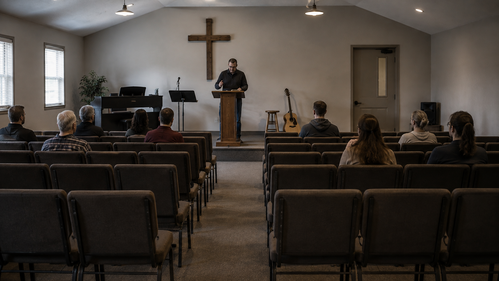
What if a church crushed it on Sunday morning and yet missed it completely Monday-Saturday? The room is packed. Music is passionate. The message is carefully crafted. Volunteers are dedicated. Giving is strong. Visitors keep arriving. (I’m describing the average pastor’s dream scenario.)
By almost every measure churches typically rely on, this church appears to be a success. But King Jesus never called His church to merely have successful Sundays. He commanded us to make disciples.
That difference is huge because our scorecard shapes our priorities. Attendance, donations, volunteers, programs, and building projects can all seem like signs of health. Yet they are poor indicators of the true mission Jesus entrusted to us.
By almost every measure churches typically rely on, this church appears to be a success. But King Jesus never called His church to merely have successful Sundays. He commanded us to make disciples.
That difference is huge because our scorecard shapes our priorities. Attendance, donations, volunteers, programs, and building projects can all seem like signs of health. Yet they are poor indicators of the true mission Jesus entrusted to us.
Bigger Doesn’t Always Mean Better
While attendance, volunteering, and giving may create the conditions for spiritual growth, they are not the same as true transformation. Real growth happens when a person increasingly surrenders to Christ and lets that relationship shape daily life.
Churches can organize programs and tally attendance, but true discipleship relies on living a Christ-centered life. The real question is: Are people pushing back darkness after they leave the seats? That’s the genuine measure of the mission of God (see Matthew 5:14-16).
Churches can organize programs and tally attendance, but true discipleship relies on living a Christ-centered life. The real question is: Are people pushing back darkness after they leave the seats? That’s the genuine measure of the mission of God (see Matthew 5:14-16).
Sending, Not Seating
Jesus sent his people in the same way that he was sent by the Father. The church isn’t just about gathering people—it's about sending them out! Jesus’ Great Commission calls us to go and make disciples by baptizing, teaching, and sharing the gospel. The large group gathering helps us grow for that purpose. Sunday is our team huddle, a place to train, but it is NOT the main event.
The real question isn’t just how many show up, but how many are going out and making a difference—sharing faith, helping others, restoring relationships, and growing in love and courage. Are we leading others to follow Jesus too?
The real question isn’t just how many show up, but how many are going out and making a difference—sharing faith, helping others, restoring relationships, and growing in love and courage. Are we leading others to follow Jesus too?
Discipleship Is Messier Than Sunday Morning
Real discipleship rarely fits neatly into a 60-minute service. Discipleship is inherently messy—filled with genuine people, disappointment, second chances, disagreements, failure, restoration, and perseverance. Yet, even amid broken relationships and flawed leaders, God’s mission presses on. This kind of spiritual formation can't be measured by attendance.
I’m convinced the most important part of the mission happens every day—at home, in the workplace, schools, neighborhoods, hospitals, coffee shops, and at dinner tables. It’s active when Christians serve, love, forgive, and seek the lost like Jesus.
I’m convinced the most important part of the mission happens every day—at home, in the workplace, schools, neighborhoods, hospitals, coffee shops, and at dinner tables. It’s active when Christians serve, love, forgive, and seek the lost like Jesus.
Change the Scorecard
Maybe we should stop tracking attendance altogether and focus on something far more eternally significant. While gathering for worship, biblical preaching, prayer, and fellowship remains important, the purpose of gathering is to prepare us and send us. So, instead of just counting seats, perhaps we should also ask:
- How many people shared the gospel?
- How many leaders are being developed?
- How many people are serving their communities?
- How many believers took a meaningful step of obedience?
- How many people loved like Jesus this week?
These questions are harder to measure but matter far more. A lively church gathers people, worships, shares faith, teaches Scripture, welcomes newcomers, and sends everyone out to make a difference. God's mission isn't just a Sunday morning event. The big question isn't how many attend, but how our community is changing because of the way people follow Jesus.
FAQ: Making Discipleship, Mission of the Church, Measuring Church Health, Church Growth, Church Success Metrics
FAQ 1: What is the true measure of the mission of God?
Answer: The true measure is not simply how many people attend church, but whether people are pushing back darkness after they leave the seats. The bigger question is how our community is changing because of the way people follow Jesus.
FAQ 2: Why are attendance, donations, volunteers, programs, and building projects poor indicators of the church’s mission?
Answer: These things can appear to be signs of church health, but they are poor indicators of the true mission Jesus entrusted to us. While attendance, volunteering, and giving may create conditions for spiritual growth, they are not the same as true transformation.
FAQ 3: What does real spiritual growth look like?
Answer: Real growth happens when a person increasingly surrenders to Christ and lets that relationship shape daily life. True discipleship relies on living a Christ-centered life.
FAQ 4: What did Jesus command His church to do?
Answer: King Jesus never called His church to merely have successful Sundays. He commanded us to make disciples.
FAQ 5: What is the purpose of the Sunday church gathering?
Answer: The large group gathering helps us grow for the purpose of making disciples. Sunday is our team huddle—a place to train—but it is not the main event.
Answer: The true measure is not simply how many people attend church, but whether people are pushing back darkness after they leave the seats. The bigger question is how our community is changing because of the way people follow Jesus.
FAQ 2: Why are attendance, donations, volunteers, programs, and building projects poor indicators of the church’s mission?
Answer: These things can appear to be signs of church health, but they are poor indicators of the true mission Jesus entrusted to us. While attendance, volunteering, and giving may create conditions for spiritual growth, they are not the same as true transformation.
FAQ 3: What does real spiritual growth look like?
Answer: Real growth happens when a person increasingly surrenders to Christ and lets that relationship shape daily life. True discipleship relies on living a Christ-centered life.
FAQ 4: What did Jesus command His church to do?
Answer: King Jesus never called His church to merely have successful Sundays. He commanded us to make disciples.
FAQ 5: What is the purpose of the Sunday church gathering?
Answer: The large group gathering helps us grow for the purpose of making disciples. Sunday is our team huddle—a place to train—but it is not the main event.
Join the Conversation
Got a question after reading this? Bring it with you this Sunday! Pastor Jeff will dive deeper into this topic during the sermon, and you’re invited to join us live and be part of the conversation.
Watch 2 Cities Church Live: live.2citieschurch.com
You can also watch live on YouTube or Facebook.
Watch 2 Cities Church Live: live.2citieschurch.com
You can also watch live on YouTube or Facebook.
Posted in Article
Posted in Making Discipleship, Mission of the Church, Measuring Church Health, Church Growth, Church Success Metrics
Posted in Making Discipleship, Mission of the Church, Measuring Church Health, Church Growth, Church Success Metrics
No Comments