
Did Jesus Pass the Ultimate Test of Leadership? Will You?
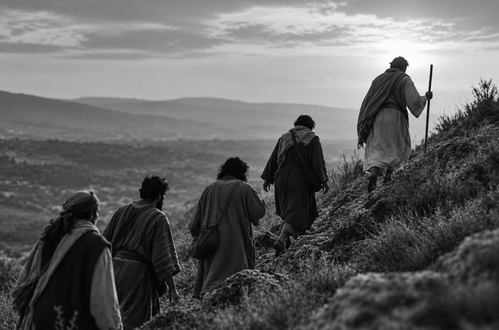
If no one can do what you do after you leave, you weren’t leading. You were just performing. There are other tests, but it is one of the most important leadership tests there is.
Leadership isn’t measured only by what happens while you are in the room. It’s measured by what happens after you leave. Real leadership reproduces itself in others so the mission can outlive the leader.
Jesus passed this test perfectly. He did not build a ministry that collapsed when He left. He built people who could carry the mission forward after He was gone. That is the ultimate test of leadership.
Leadership isn’t measured only by what happens while you are in the room. It’s measured by what happens after you leave. Real leadership reproduces itself in others so the mission can outlive the leader.
Jesus passed this test perfectly. He did not build a ministry that collapsed when He left. He built people who could carry the mission forward after He was gone. That is the ultimate test of leadership.
Jesus Focused on People More Than Performing
Jesus could have focused on performing miracles, preaching, confronting leaders, and meeting urgent needs, and He did. But most of His strategic attention was on twelve disciples.
Despite thousands in the crowds, He invested in a small group of ordinary people—teaching, preparing, and sending them. He understood that moments fade, but movements continue through people.
Many leaders get distracted by the crowd and applause, but Jesus built the force that would fulfill His mission. Crowds celebrate God's work; disciples carry it forward. That’s the key difference.
Despite thousands in the crowds, He invested in a small group of ordinary people—teaching, preparing, and sending them. He understood that moments fade, but movements continue through people.
Many leaders get distracted by the crowd and applause, but Jesus built the force that would fulfill His mission. Crowds celebrate God's work; disciples carry it forward. That’s the key difference.
Jesus Shared More Than Information
Jesus did far more than teach lessons–He demonstrated love. His aim was to develop leaders with His heart and mission, able to lead without Him physically present.
Most leaders teach tasks, but Jesus taught His disciples how to live, love, and lead. He reproduced His character, not just transferred information. Real leadership moves people toward maturity, not dependence.
Most leaders teach tasks, but Jesus taught His disciples how to live, love, and lead. He reproduced His character, not just transferred information. Real leadership moves people toward maturity, not dependence.
Jesus’s Method Was Simple and Unstoppable
Jesus did more than delegate tasks. He developed people. There’s a huge difference between the two. Delegation asks, “Can you help me get this done?” Development asks, “Can this responsibility help you become the leader God is calling you to be?”
You don’t build leaders by watching from the sidelines. They are formed through proximity, responsibility, correction, encouragement, failure, restoration, and release.
A simple leadership development pattern looks like this:
You don’t build leaders by watching from the sidelines. They are formed through proximity, responsibility, correction, encouragement, failure, restoration, and release.
A simple leadership development pattern looks like this:
Watch me do it… Do it with me… I’ll watch you do it… Now you do it without me… Then teach someone else to do it.
That is not complicated, but it is powerful.
Paul continued Jesus’s leadership method in 2 Timothy 2:2 when he wrote, “What you have heard from me in the presence of many witnesses entrust to faithful men, who will be able to teach others also.” That’s four generations in one sentence! That’s multiplication. That’s unstoppable leadership.
Paul continued Jesus’s leadership method in 2 Timothy 2:2 when he wrote, “What you have heard from me in the presence of many witnesses entrust to faithful men, who will be able to teach others also.” That’s four generations in one sentence! That’s multiplication. That’s unstoppable leadership.
Jesus Prepared for His Departure
Many leaders build teams that depend on them, but Jesus prepared His followers for His absence by consistently telling them He was leaving, promising the Holy Spirit, and giving the Great Commission. He didn’t hide the future but equipped them for it.
Some leaders avoid succession to protect their ego, wanting to be needed or the final decision-maker. But if everything depends on you, you haven't built leadership—you've created a bottleneck.
Some leaders avoid succession to protect their ego, wanting to be needed or the final decision-maker. But if everything depends on you, you haven't built leadership—you've created a bottleneck.
Success Is Successors
The ultimate leadership test occurs after the leader is gone. You can't fully gauge leadership while they're present; you see it when they leave. Did the mission persist? Did others grow? Did the work continue?
Jesus passed this test perfectly. His death caused despair, but after His resurrection, He spent forty days strengthening and teaching His followers for what was to come. Then He ascended, and they got busy—preaching, planting churches, making disciples.
Jesus didn't leave behind consumers–He left leaders. Not fans, but disciple-makers. Not a religion reliant on His physical presence, but a Spirit-empowered movement aimed at the nations. That is true leadership.
Jesus passed this test perfectly. His death caused despair, but after His resurrection, He spent forty days strengthening and teaching His followers for what was to come. Then He ascended, and they got busy—preaching, planting churches, making disciples.
Jesus didn't leave behind consumers–He left leaders. Not fans, but disciple-makers. Not a religion reliant on His physical presence, but a Spirit-empowered movement aimed at the nations. That is true leadership.
Who Are You Developing?
Every leader must answer: Who will carry the mission after me? Not who admires, needs, or likes your leadership, but who you are developing to lead.
Don’t wait for a title or large team—start developing someone now. Find someone faithful, humble, teachable, and willing. Bring them close, give responsibility, coach through mistakes, help them grow, and send them to do the same.
That is how the mission continues. That is how leadership multiplies. That is how Jesus led. And that is the test you must pass too. Because if the work ends when you leave, you may have performed well. But if the mission continues through the people you developed, you have aced the test.
Don’t wait for a title or large team—start developing someone now. Find someone faithful, humble, teachable, and willing. Bring them close, give responsibility, coach through mistakes, help them grow, and send them to do the same.
That is how the mission continues. That is how leadership multiplies. That is how Jesus led. And that is the test you must pass too. Because if the work ends when you leave, you may have performed well. But if the mission continues through the people you developed, you have aced the test.
Frequently Asked Questions
1. What is the ultimate test of leadership?
The ultimate test of leadership is what happens after the leader leaves. Real leadership reproduces itself in others so the mission can continue.
2. What can we learn about leadership from Jesus?
Jesus showed that effective leadership is about developing people, not creating dependence. He invested in His disciples so they could carry the mission forward.
3. How did Jesus develop leaders?
Jesus developed leaders through teaching, modeling, responsibility, correction, encouragement, failure, restoration, and release. He reproduced His character and mission in His disciples.
4. Why is succession important in leadership?
Succession ensures that the mission continues after a leader is gone. Jesus prepared His followers for His departure instead of allowing the work to depend entirely on Him.
5. How do you develop leaders who can carry on the mission?
Find someone faithful, humble, teachable, and willing, then give them responsibility, coach them through mistakes, and eventually release them to develop others.
The ultimate test of leadership is what happens after the leader leaves. Real leadership reproduces itself in others so the mission can continue.
2. What can we learn about leadership from Jesus?
Jesus showed that effective leadership is about developing people, not creating dependence. He invested in His disciples so they could carry the mission forward.
3. How did Jesus develop leaders?
Jesus developed leaders through teaching, modeling, responsibility, correction, encouragement, failure, restoration, and release. He reproduced His character and mission in His disciples.
4. Why is succession important in leadership?
Succession ensures that the mission continues after a leader is gone. Jesus prepared His followers for His departure instead of allowing the work to depend entirely on Him.
5. How do you develop leaders who can carry on the mission?
Find someone faithful, humble, teachable, and willing, then give them responsibility, coach them through mistakes, and eventually release them to develop others.
Join the Conversation
What happens when faith is called to act—but the Church goes AWOL? Pastor Jeff brings our Ask Me Anything series to a close as we discover what it means to follow Jesus, make disciples, and carry His mission forward. Bring a friend and join us this Sunday—or join us live from home. Don’t miss the conversation!
Bring a friend and join us this Sunday—or join us live from home. Don’t miss the conversation!
Bring a friend and join us this Sunday—or join us live from home. Don’t miss the conversation!
Posted in Article
Posted in Jesus Leadership, Christian Leadership, Jesus and Discipleship, Leadership Principles
Posted in Jesus Leadership, Christian Leadership, Jesus and Discipleship, Leadership Principles
No Comments