Preparing for the Worst: Two Rules for Surviving the “Big One” or the Zombie Apocalypse (whichever comes first)
Let’s say the “Big One” or zombie apocalypse starts this Thursday. (Because zombies don’t attack on Friday. They take the weekends off, like the rest of us.)
The news breaks at 6 a.m. By 6:15, half your neighbors are wrestling over the last case of bottled water at the grocery store. The other half are filming it. Don’t even get me started on the toilet paper rush!!!
You, meanwhile, are pouring a cup of coffee. You’ve got water in the closet, a flashlight that actually works, and a family that knows exactly where to meet.
You’re not a doomsday prepper with a bunker and 900 cans of beans. You just follow two simple rules:
They work for zombies. They work even better for the disasters that actually happen, like hurricanes, power outages, and that 2 a.m. cell phone emergency alert.
The news breaks at 6 a.m. By 6:15, half your neighbors are wrestling over the last case of bottled water at the grocery store. The other half are filming it. Don’t even get me started on the toilet paper rush!!!
You, meanwhile, are pouring a cup of coffee. You’ve got water in the closet, a flashlight that actually works, and a family that knows exactly where to meet.
You’re not a doomsday prepper with a bunker and 900 cans of beans. You just follow two simple rules:
- Don’t be stupid. Have a plan before you need it.
- Don’t be stressed. Stop sweating the stuff you can’t control.
They work for zombies. They work even better for the disasters that actually happen, like hurricanes, power outages, and that 2 a.m. cell phone emergency alert.
Rule #1: Don’t be stupid
Zombie movies thrive on bad planning: someone checks the creepy basement, someone says, “I’ll be right back,” and the theater groans. Fail to plan, and you’ve planned to fail. (AKA “stupid.”)
Real life is less dramatic: a dead flashlight, an emergency kit with one granola bar and a birthday candle. That’s not bad luck—it’s Past You forgetting to plan. Fortunately, the US government has done some homework for you. In 2011, the CDC published a zombie apocalypse preparedness guide, using zombies to share advice for real emergencies.
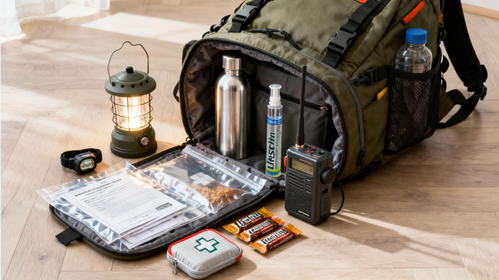
It went viral so fast that the CDC’s web server went down for a few hours. (Apparently, nothing motivates living people like the undead.) Start with their kit list. It works just as well for any emergency:
A kit is half the job. The other half is a plan everybody in the house knows:
Real life is less dramatic: a dead flashlight, an emergency kit with one granola bar and a birthday candle. That’s not bad luck—it’s Past You forgetting to plan. Fortunately, the US government has done some homework for you. In 2011, the CDC published a zombie apocalypse preparedness guide, using zombies to share advice for real emergencies.
It went viral so fast that the CDC’s web server went down for a few hours. (Apparently, nothing motivates living people like the undead.) Start with their kit list. It works just as well for any emergency:
- Water: one gallon per person, per day.
- Food: non-perishables you already eat. Nobody eats canned cranberries except on Thanksgiving. Everyone knows Zombies don’t attack on Thanksgiving.
- Medications: prescription and over-the-counter.
- Tools: a utility knife, duct tape, and a battery-powered radio.
- Sanitation: bleach, soap, and towels. The apocalypse is no excuse.
- Clothes and bedding: a change of clothes for everyone, plus blankets.
- Documents: photocopies of your driver’s license, passport, and birth certificate.
- First aid: for everyday cuts and scrapes. (Nuclear fallout burns in an open cut.)
A kit is half the job. The other half is a plan everybody in the house knows:
- Understand your local disasters. Floods, tornadoes, hurricanes, earthquakes. Zombies are optional.
- Pick two meeting spots. One right outside your home, and one outside the neighborhood in case you can’t get back.
- Write down your contacts. Include one out-of-state person who can tell everyone you’re safe. Use paper, because a dead cell phone is just a metal brick.
- Map your way out. Know where you’d go and a few ways to get there before the highway turns into a parking lot.
Rule #2: Don’t be stressed
Some stuff you can control; other stuff you can’t. Don’t stress about the stuff you can’t control. Once the kit is packed and the plan is set, you’re officially off the worry clock.
You can’t control the zombies. You can’t control the weather. You can’t control a biological or nuclear attack. You definitely can’t control your unstable neighbor in the yard, wearing boxers and screaming, “WE’RE ALL GONNA DIE!”
Worry gives a false sense of control, but it’s a cruel lie. Worry refreshes with the next news broadcast, but it’s totally worthless. No one has ever survived a disaster by worrying.
Sort your worries into two piles:
If it’s in your column, handle it. If it’s in the other column, let it go. You can’t fight the weather, but you can react with common sense. BTW, calm is contagious. So is panic. In a crisis, the calmest person in the room has a better chance of survival.
You can’t control the zombies. You can’t control the weather. You can’t control a biological or nuclear attack. You definitely can’t control your unstable neighbor in the yard, wearing boxers and screaming, “WE’RE ALL GONNA DIE!”
Worry gives a false sense of control, but it’s a cruel lie. Worry refreshes with the next news broadcast, but it’s totally worthless. No one has ever survived a disaster by worrying.
Sort your worries into two piles:
| What you can control: | What’s out of your control: |
Water and food in the closet | How many zombies are on your street |
| A full gas tank | The traffic jam on the interstate |
| Two meeting spots your family knows | The overloaded cell phone network |
| Checking on the older neighbor | Nuclear fallout |
| Staying calm so your family stays calm | The moron on the evening news |
If it’s in your column, handle it. If it’s in the other column, let it go. You can’t fight the weather, but you can react with common sense. BTW, calm is contagious. So is panic. In a crisis, the calmest person in the room has a better chance of survival.
Why you need both rules
Rule #1 makes Rule #2 possible. It’s hard to stay calm with no water, no plan, and a phone at 3%. But either rule alone is a trap. Planning without peace makes you the sweaty guy in the bunker, counting cans at midnight. Peace without planning is just denial in a hammock. Do the work, then drop the worry. Prepare as if it all depends on you, but pray as if it all depends on God.
Start before the sirens
Zombies are fictional. Hurricanes, ice storms, layoffs, and late-night phone calls are real. Preparing for them doesn’t cost a fortune—it takes one Saturday afternoon and a little follow-through.
Here are a few things you can do today: Stash a case of water in the garage. Write three phone numbers on an index card and tape it inside a kitchen cabinet. Check your flashlight batteries. Text your family the two meeting spots. Then go relax. You’ve earned it.
When the dead start walking or the power goes out, you won’t be the one wrestling strangers in the water aisle. You’ll be the calm one sipping a cup of coffee.
Don’t be stupid. Don’t be stressed. Just be ready.
Frequently Asked Questions
1. How do you prepare for a disaster?
Answer: Have an emergency survival kit and a family emergency plan ready before disaster strikes. Know your local risks, choose meeting spots, and prepare for what you can control.
2. What should be in an emergency kit?
Answer: Include water, non-perishable food, medications, a flashlight, a battery-powered radio, first aid supplies, and important documents. Keep one gallon of water per person, per day.
3. How do you stay calm during an emergency?
Answer: Focus on what you can control and stop worrying about what you can't. Having a plan helps reduce stress and keeps your family prepared.
Posted in Article
Posted in Emergency Preparedness, Disaster Survival Tips, Crisis Management, Emergency Safety Tips, Disaster Anxiety
Posted in Emergency Preparedness, Disaster Survival Tips, Crisis Management, Emergency Safety Tips, Disaster Anxiety
No Comments